
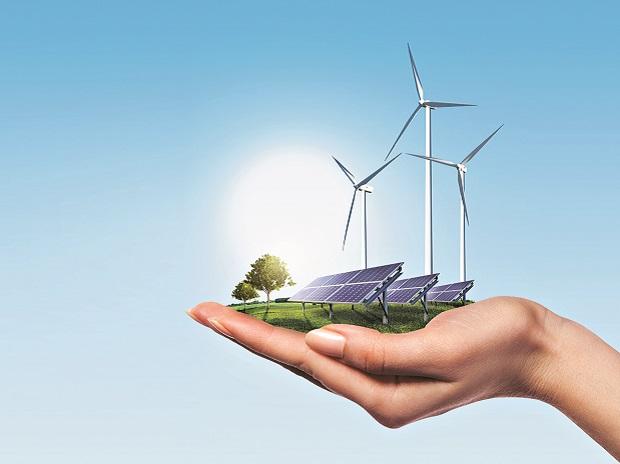
The global venture capital landscape is undergoing a profound transformation. As climate risks intensify and governments push for net-zero targets, clean technology has shifted from a niche sustainability theme to a central pillar of economic growth. According to Rajat Khare, Founder and CEO of Boundary Holding, clean-tech is rapidly emerging as the new growth engine for US venture capital investment.
For decades, Europe led climate-focused investments, benefiting from progressive environmental regulations and sustainability-driven policies. However, recent macroeconomic pressures and political uncertainties have reshaped the investment map. Today, the United States is positioning itself at the forefront of clean-tech innovation, attracting record levels of venture capital and redefining global climate investment strategies.
The US Emerges as a Clean-Tech Powerhouse
In 2023, venture capital funding across Europe experienced a noticeable slowdown due to economic instability, inflationary pressures, and geopolitical tensions. Investors began reevaluating risk exposure and seeking markets with stronger policy backing and scalable innovation ecosystems.
The United States, supported by robust federal initiatives, has stepped into this opportunity. A defining moment came with the passage of the Inflation Reduction Act, which allocated approximately $370 billion toward climate action and clean energy initiatives. The legislation marked one of the largest climate investments in American history, sending a strong signal to global investors that clean energy was no longer optional—it was strategic.
Under the IRA framework, incentives for electric vehicle manufacturing, battery production, renewable power generation, and hydrogen infrastructure have catalyzed private-sector confidence. Venture capital firms, recognizing the multiplier effect of policy support, have increased allocations toward climate-aligned startups.
According to Khare, this shift is not merely cyclical but structural. “The US clean-tech ecosystem now combines policy certainty, capital availability, and technological depth,” he has emphasized in discussions on investment strategy. “That alignment creates a compelling environment for long-term venture growth.”
Clean-Tech as a Strategic Asset Class
Clean-tech today encompasses far more than renewable energy. It includes electric mobility, energy storage, smart grid systems, carbon capture technologies, green hydrogen, climate analytics, and AI-driven efficiency platforms. This breadth has expanded its appeal to venture capitalists seeking scalable, high-impact solutions.
The US now stands as the largest global recipient of clean-tech venture funding, surpassing Europe and China in total capital inflows. Investors are drawn not only by government subsidies but also by the maturity of the American startup ecosystem. From Silicon Valley’s deep-tech expertise to emerging energy hubs in Texas and the Midwest, innovation clusters are accelerating commercialization.
Khare notes that climate innovation aligns closely with deep-tech investment principles. “Clean-tech ventures often involve breakthrough engineering and long-term intellectual property development,” he explains. “For patient capital, these are precisely the opportunities that can deliver both impact and outsized returns.”
Resilience Amid Global Challenges
One of the most striking aspects of the US clean-tech surge is its resilience. During the COVID-19 pandemic and subsequent geopolitical instability, traditional sectors faced sharp contractions. Yet clean energy investment continued to grow.
Policy support under the IRA amplified this momentum, offering tax credits, grants, and performance-based incentives to projects that reduce carbon emissions and enhance energy efficiency. The electric vehicle sector, for instance, has experienced rapid advances in battery storage technologies, lowering costs while extending driving range. Meanwhile, green hydrogen initiatives have gained traction as an alternative to fossil fuels, particularly in heavy industry and transport.
The result is a reinforcing cycle: public investment de-risks early innovation, private capital scales proven solutions, and market demand drives further adoption.
Obstacles and Market Complexities
Despite the optimism, Khare cautions against overlooking structural risks. Clean-tech remains one of the most capital-intensive segments within venture investing. Early-stage startups often struggle with long development cycles, regulatory compliance, and high manufacturing costs.
The global clean-tech market is intensely competitive. While the US leads in capital inflows, international markets—particularly in Europe and Asia—continue advancing in renewable infrastructure, battery research, and next-generation materials. This dynamic creates pressure on American startups to innovate rapidly and maintain technological leadership.
Additionally, macroeconomic factors such as rising interest rates, trade tensions, and supply chain disruptions can dampen investor appetite. Clean-tech projects, particularly those requiring physical infrastructure, are sensitive to financing conditions.
Regulatory complexity also poses challenges. Federal and state-level energy policies can differ significantly, creating a layered compliance environment that startups must navigate carefully. For global investors like Boundary Holding, understanding both domestic frameworks and international regulatory trends is critical.
Scaling Innovation: The Next Frontier
A persistent hurdle in clean-tech is the “valley of death” between proof-of-concept and commercial scale. Many startups demonstrate promising prototypes but lack the capital to transition into mass production. Venture capital alone is often insufficient; strategic partnerships, government co-funding, and institutional investment play vital roles.
Khare argues that successful clean-tech investment requires more than capital injection—it demands ecosystem building. This includes fostering collaboration between research institutions, industrial partners, policymakers, and investors. “Scaling is where impact truly materializes,” he notes. “Investors must evaluate not just the technology, but the pathway to commercialization.”
A Measured Approach to Growth
While clean-tech presents substantial opportunity, Khare emphasizes disciplined strategy over exuberance. The urgency of climate action can sometimes create speculative enthusiasm, inflating valuations beyond realistic performance metrics.
He encourages investors to balance ambition with due diligence, assessing long-term viability, regulatory exposure, and global competitiveness. The interconnected nature of the clean-tech market means developments in one region can quickly influence global supply chains and pricing dynamics.
For venture capital firms, diversification within the clean-tech spectrum—across energy storage, smart infrastructure, sustainable materials, and digital climate solutions—can mitigate sector-specific risks while preserving upside potential.
A Transformational Investment Shift
The rise of clean-tech as a dominant force in US venture capital signals more than a trend; it represents a transformation in how markets value sustainability. Climate resilience is increasingly viewed not as a compliance requirement but as a driver of economic innovation.
As the US continues to attract unprecedented funding in clean energy, the convergence of policy support, technological innovation, and private capital is creating a fertile ground for long-term growth.
For Rajat Khare and Boundary Holding, this moment underscores a broader thesis: that the future of venture capital lies at the intersection of deep technology and global impact. Clean-tech, once peripheral, now stands at the center of that vision.
The coming years will determine how effectively investors translate capital into scalable solutions. If managed strategically, America’s clean-tech surge could redefine both the venture capital industry and the global energy landscape—delivering not only financial returns but also measurable progress toward a sustainable future.
Main Source of url of this article here– https://www.investing.com/studios/contributor-content/clean-tech-is-the-new-frontier-for-us-venture-capital-investment-says-boundary-holdings-rajat -khare-382690
Also read new article – What Makes Artificial Intelligence in Dubai Vital for Businesses