
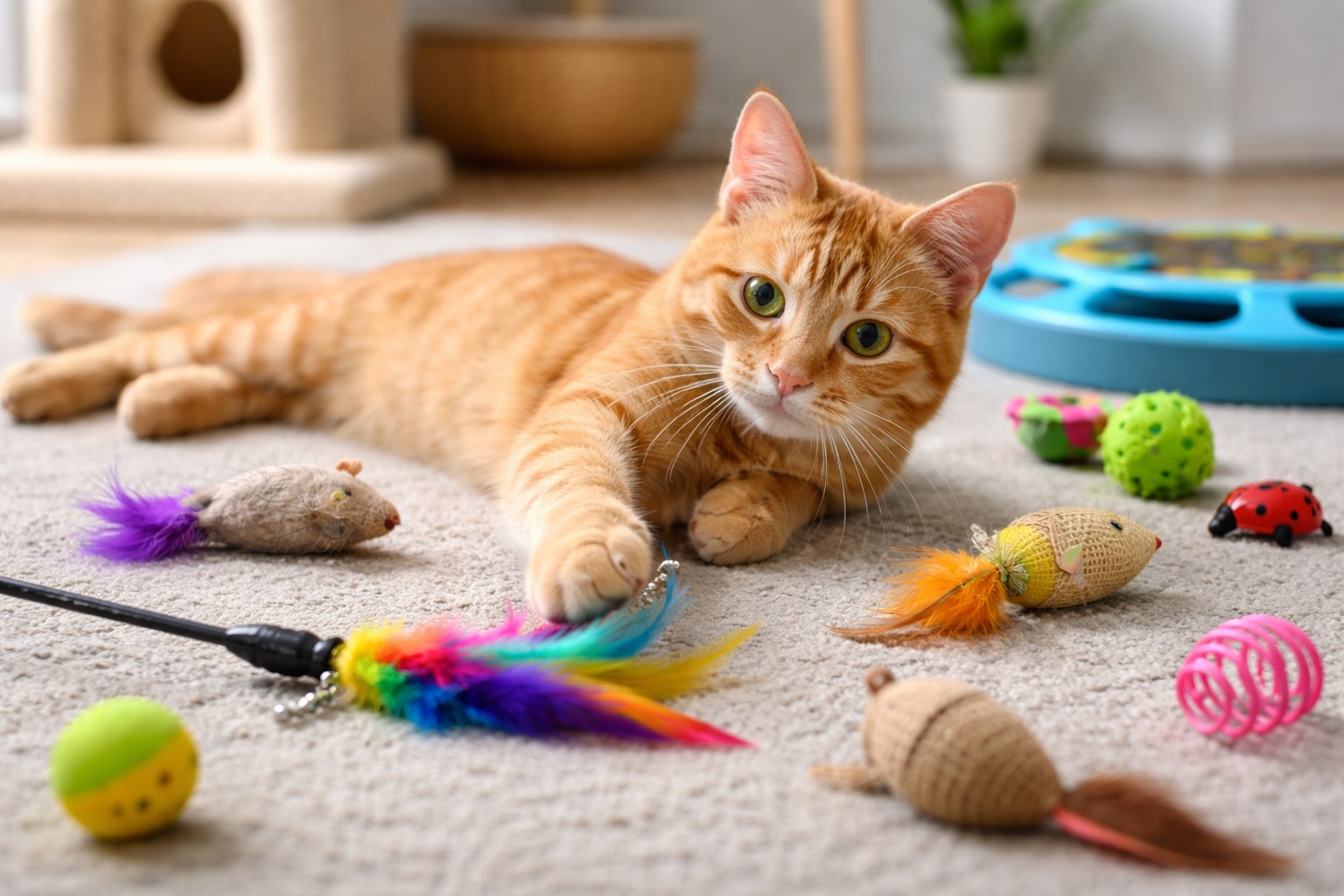
Cats are known for their playful nature—but what happens when your furry friend seems completely uninterested in toys? You buy new items, try different styles, and yet your cat just stares… or worse, walks away. If this sounds familiar, you’re not alone.
Many cat owners in the USA face this exact issue. The truth is, a lack of engagement doesn’t mean your cat is lazy or unwell—it often comes down to understanding their instincts, environment, and preferences.
In this guide, we’ll explore why your cat ignores toys and, more importantly, how to fix it effectively.
You’ll also learn how subtle changes in your routine, toy selection, and play techniques can make a big difference. By recognizing what truly motivates your cat, you can turn even the simplest playtime into a fun, enriching experience they actually look forward to every day.
Understanding Your Cat’s Natural Instincts
Cats are natural hunters. Even domesticated indoor cats retain strong instincts to stalk, chase, and pounce. However, their play behavior is closely tied to how well a toy mimics real prey.
If a toy doesn’t trigger that instinct, your cat simply won’t care.
Common reasons include:
- Toys don’t move like prey
- Lack of unpredictability
- No scent or stimulation
- Overexposure to the same toy
Your cat isn’t ignoring toys—they’re just not impressed.
1. Your Cat Is Bored of the Same Toys
Just like humans, cats get bored quickly. Leaving the same toys out every day can make them lose their appeal.
Fix:
- Rotate toys every few days
- Keep some hidden and reintroduce later
- Create a “new toy” experience without buying new ones
This simple trick can instantly boost interest in even the most basic cat toys.
2. The Toy Doesn’t Mimic Prey Behavior
A toy that just sits there won’t excite your cat. Cats are wired to respond to movement—especially erratic, unpredictable motion.
Fix:
- Use wand toys that imitate birds or insects
- Drag toys across the floor like a mouse
- Add pauses and sudden movements
The goal is to activate your cat’s hunting sequence: stalk → chase → pounce.
3. Your Cat Has Too Much Energy—or Too Little
Cats that have excess energy may seem hyper but uninterested in toys, while low-energy cats may not engage at all.
Fix:
- Schedule play sessions during peak activity (morning/evening)
- Keep sessions short (10–15 minutes) but frequent
- End playtime with a small treat to simulate a “successful hunt”
Consistency is key to building engagement.
4. Environment Plays a Huge Role
A noisy, stressful, or cluttered environment can make your cat less likely to play.
Signs your cat is uncomfortable:
- Hiding frequently
- Avoiding open spaces
- Easily startled
Fix:
- Create a calm play zone
- Reduce distractions like loud TV or other pets
- Use vertical spaces like cat trees for added confidence
When cats feel safe, they’re more likely to engage.
5. You’re Not Playing the Right Way
Many cat owners unknowingly use toys incorrectly. Simply waving a toy randomly may not trigger interest.
Fix:
- Think like prey, not a human
- Move toys in short, quick bursts
- Let your cat “win” occasionally
Interactive play is essential—even the best cat toys won’t work without proper engagement.
6. Age and Personality Matter
Kittens are naturally playful, but adult and senior cats may be more selective.
Adjust your approach:
- Kittens: High-energy, fast-moving toys
- Adults: Strategic, realistic hunting games
- Seniors: Slower movements and softer toys
Understanding your cat’s personality can make a huge difference.
7. The Power of Catnip
If your cat shows zero interest in toys, introducing catnip can be a game changer.
What does catnip do to cats?
Catnip contains a compound called nepetalactone that triggers a temporary euphoric response in many cats. This can make them more playful, energetic, and engaged.
How to use it:
- Sprinkle on toys
- Use catnip-infused toys
- Offer it occasionally (not daily) to maintain effectiveness
However, not all cats respond to catnip—around 30–40% may not react at all.
8. Your Cat Might Be Overstimulated
Sometimes, the issue isn’t boredom—it’s overstimulation.
Signs:
- Sudden biting or scratching during play
- Tail flicking aggressively
- Ears pinned back
Fix:
- Keep play sessions controlled
- Stop before your cat gets overwhelmed
- Learn your cat’s limits
Balanced play is more effective than long, intense sessions.
9. Health Issues Could Be a Factor
If your cat suddenly stops playing, it could indicate a health issue.
Watch for:
- Lethargy
- Loss of appetite
- Changes in behavior
In such cases, consult a veterinarian before assuming it’s a toy issue.
10. Try Different Types of Toys
Not all cats like the same things. Experimentation is key.
Popular options:
- Feather wands
- Laser pointers (use responsibly)
- Puzzle feeders
- Crinkle balls
- Interactive electronic toys
Finding the right match can transform your cat’s behavior.
Pro Tips to Boost Playtime Engagement
- Play before feeding time to mimic hunting cycles
- Use positive reinforcement
- Keep sessions fun and stress-free
- Avoid forcing your cat to play
Remember, patience and observation go a long way.
Final Thoughts
If your cat ignores toys, it’s not a dead end—it’s a signal. Your cat is telling you something about their preferences, environment, or needs.
By understanding their instincts and making small adjustments, you can turn playtime into one of the most enjoyable parts of their day.
The right approach, combined with the right cat toys, can unlock your cat’s natural curiosity and energy. Over time, this also strengthens your bond, reduces stress, and supports better physical and mental health for your cat. It also helps prevent boredom-related behaviors like scratching furniture or excessive sleeping. With patience and consistency, even the most uninterested cats can rediscover the joy of play and stay active.
FAQs
1. Why does my cat ignore toys but play with random objects?
Cats are attracted to unpredictability. Random objects often move or smell differently, making them more appealing than standard toys.
2. How often should I play with my cat?
Aim for at least 1–2 play sessions daily, each lasting 10–15 minutes.
3. Are expensive toys better for cats?
Not necessarily. Even simple items can be effective if used correctly. Engagement matters more than price.
4. Can older cats still enjoy toys?
Yes, but they may prefer slower-paced and less intense play styles.
5. Is catnip safe for daily use?
It’s safe but best used occasionally to maintain its effectiveness and avoid desensitization.
Read more: Is Your Cat Eating Right? A Guide to the Best Cat Food