
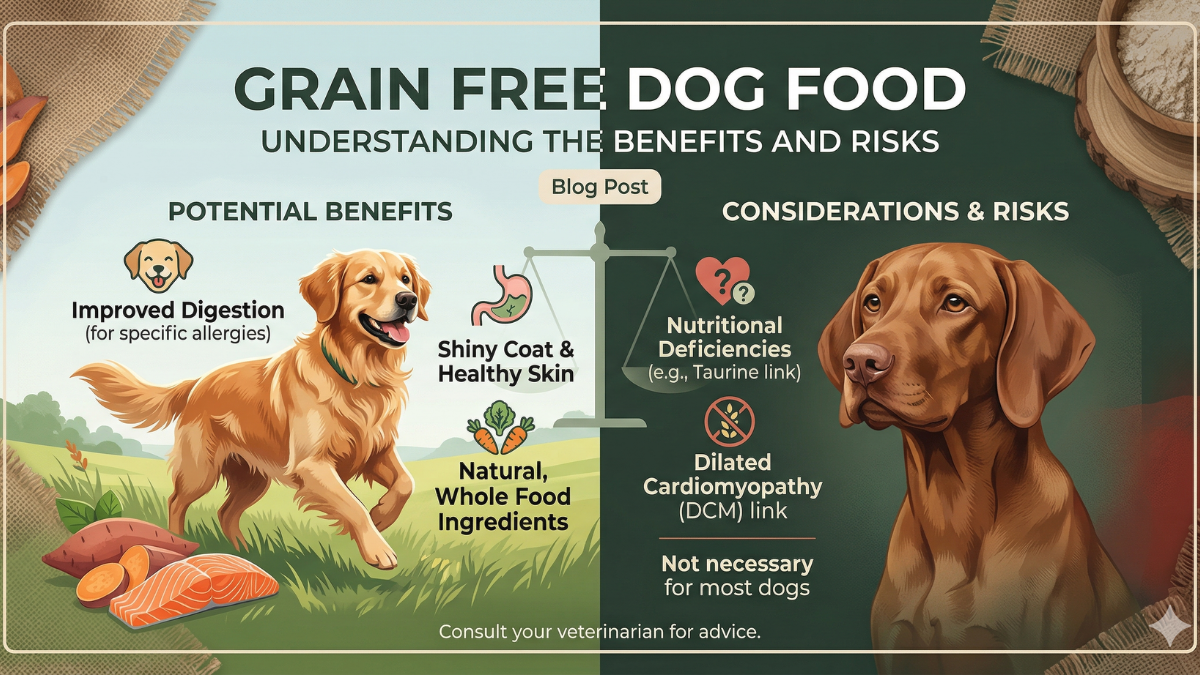
In recent years, grain free dog food has surged in popularity. Pet owners often associate grain‑free diets with being more natural, believing that grains cause allergies or digestive issues. However, veterinary nutritionists caution that this trend is driven more by marketing than science. This article discusses what grain‑free diets are, examines the evidence regarding their benefits and potential risks, and offers guidance on when a grain‑free formula might be appropriate for your pet.
What is grain‑free dog food?
A grain‑free diet excludes traditional cereals such as corn, wheat, rice, barley and oats. To replace grains, manufacturers use other carbohydrate sources like potatoes, sweet potatoes, peas, lentils or legumes. Some formulas also incorporate exotic meats like venison or bison, which can increase cost and may not provide nutritional advantages. These diets are sometimes labeled as “boutique, exotic or grain‑free” (BEG diets).
Why did grain‑free become popular?
Grain‑free diets are often marketed as being closer to a dog’s ancestral diet and as solutions for allergies or sensitive stomachs. Yet there is no evidence that grains are inherently harmful to dogs. According to veterinary nutritionists at Tufts University, whole grains provide valuable vitamins, minerals, essential fatty acids and fibre. Most dogs digest more than 90% of nutrients from grains, and grain allergies are extremely rare. Some grain products are even easier to digest than certain meat proteins. In many cases, grain‑free diets simply substitute other starches or pulses that may offer less nutrition and can cost more.
Potential risks of grain‑free diets
Beginning in 2018, the U.S. Food and Drug Administration (FDA) began investigating a possible link between grain‑free diets and an increase in cases of canine dilated cardiomyopathy (DCM), a heart disease that reduces the heart’s ability to pump blood. The agency received 524 reports of DCM between 2014 and 2019. Over 90% of reported cases involved dogs eating grain‑free foods that contained peas, lentils or potatoes as primary ingredients. Although a causal relationship has not been proven, the FDA and veterinary cardiologists are concerned because DCM was observed in breeds not typically predisposed to the disease. Dr. Jerry Klein, the Chief Veterinary Officer of the American Kennel Club (AKC), notes that the FDA is investigating potential links between diets containing legumes or potatoes and DCM but emphasises that definitive evidence is lacking.
Similarly, the ASPCA warns that while a relationship between grain‑free diets and DCM has not been fully proven, many dogs improved when switched from BEG diets to grain‑inclusive formulas. The ASPCA advises that dogs eating grain‑free diets should be monitored for signs of heart disease and that alternative diets are available for pets with food allergies.
Veterinary nutritionist Lisa M. Freeman calls for caution with BEG diets because the ingredients used to replace grains, such as lentils or chickpeas, may contribute to deficiencies. The suspected link may be due to exotic ingredients and novel proteins rather than the absence of grains.
When grain‑free may be appropriate
There are circumstances where a high quality grain free dog food may be necessary. Some dogs do have food allergies, although they are more commonly allergic to animal proteins like chicken or beef. If a dog is diagnosed with a grain allergy or intolerance, a grain‑free diet using alternative carbohydrate sources may alleviate symptoms. However, this diagnosis should be made by a veterinarian, and the diet should still meet AAFCO nutrient profiles.
Owners may also choose dog grain free food because of personal preference or perceived benefits. If you opt for a grain‑free diet, choose a brand that employs veterinary nutritionists, conducts feeding trials and follows the World Small Animal Veterinary Association (WSAVA) guidelines. Ensure the formula contains high‑quality animal protein, healthy fats and a balanced blend of vitamins and minerals. Some grain‑free recipes also include novel proteins like duck or venison, which can be beneficial for dogs with protein allergies.
Guidelines for selecting grain‑free dog food
- Consult your veterinarian. Before switching to a grain‑free diet, discuss your dog’s health history and nutritional needs with a veterinarian. They can help determine whether a grain‑free formula is appropriate and monitor your dog for any health changes.
- Look for “complete and balanced” on the label. Regardless of grain content, the food must meet AAFCO nutrient profiles.
- Assess ingredient quality. Choose formulas with meat or fish as the first ingredient, and avoid diets that rely heavily on legumes or potatoes. Look for added taurine or amino acid supplements, which may support heart health.
- Beware of exotic ingredients. Diets with novel proteins or unusual ingredients may be less well studied and more expensive. Unless medically necessary, stick to well‑researched formulas from established brands.
- Monitor your dog’s health. If your dog is already on a grain‑free diet, watch for signs of lethargy, coughing or fainting, which could indicate heart issues. Routine check‑ups and diagnostics like echocardiograms may be recommended for dogs eating BEG diets.
Conclusion
The popularity of grain free dog food illustrates how marketing trends can influence pet owners’ choices. While grain‑free formulas may be beneficial for dogs with diagnosed allergies, whole grains provide valuable nutrients and are well tolerated by the majority of dogs. Emerging evidence suggests that some BEG diets may be linked to heart disease, so owners should consult their veterinarian before feeding exclusively grain‑free diets. By focusing on nutrient balance, quality ingredients and evidence‑based formulas, you can choose the best grain free dog food when necessary and ensure your dog remains healthy and happy.
Faqs
1. What is grain free dog food?
Grain free dog food is a type of dog food that excludes grains like wheat, corn, rice, and barley. Instead, it uses alternatives such as sweet potatoes, lentils, or peas as carbohydrate sources.
2. What are the benefits of grain free dog food?
Grain free dog food may help dogs with grain sensitivities or allergies. It can support better digestion, improve skin health, and provide high-quality protein, making it a popular option among pet owners.
3. Are there any risks associated with grain free dog food?
Yes, some studies have linked grain free diets to potential heart issues like dilated cardiomyopathy (DCM) in certain dogs. It’s important to choose high-quality formulas and consult a veterinarian before switching.
4. Is grain free dog food better than regular dog food?
Not necessarily. While grain free dog food can benefit dogs with specific dietary needs, many dogs thrive on regular balanced diets that include grains. The best choice depends on your dog’s health and nutritional requirements.
5. How do I know if my dog needs grain free dog food?
If your dog shows signs like itching, digestive problems, or food allergies, your vet may recommend trying grain free dog food. Always consult a professional before making dietary changes.
Read More: Soft Dog Treats: Benefits, Uses & Best Options for Every Dog