
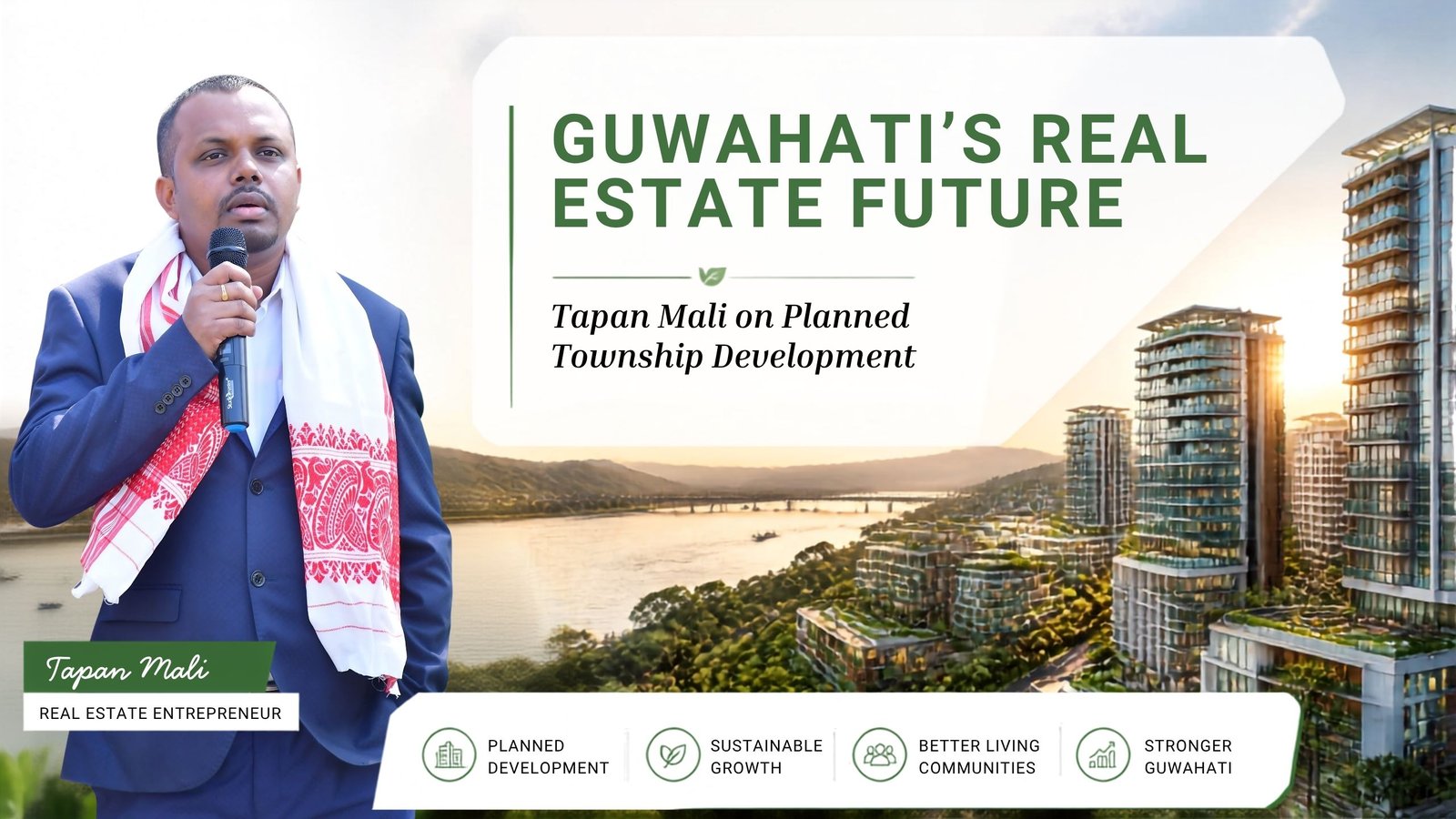
Guwahati has always been the economic and commercial centre of Assam, connecting the Northeast with the rest of India through trade, transportation, education, and business opportunities. As the city continues to expand, the demand for better housing solutions, improved infrastructure, and organised communities is also increasing.
The future of Guwahati real estate is moving beyond individual residential projects toward more structured and planned developments. Entrepreneurs and real estate professionals are exploring opportunities to create communities that focus on better planning, accessibility, and modern living standards. Among the names associated with Assam’s growing real estate sector is Tapan Mali, whose business activities through the Green Orchid Group include real estate-related initiatives and planning-focused developments.
Understanding Guwahati’s Real Estate Growth
Over the last few years, Guwahati has experienced significant urban expansion. The city’s growth has been influenced by improvements in transportation, commercial activity, educational institutions, and infrastructure projects.
As more people move to Guwahati for employment, business, and lifestyle opportunities, demand for quality residential spaces has increased. Areas around the city’s outskirts are becoming important growth zones as available land and connectivity create opportunities for new developments.
The increasing demand has also changed expectations among homebuyers. Modern buyers are not only looking for a house but also considering factors such as connectivity, security, green spaces, basic facilities, and long-term community value.
This shift is creating opportunities for organised real estate development in Assam, where planned communities can address residents’ changing needs.
Why Planned Township Development Matters for Assam
A township development is different from a traditional housing project. Instead of focusing only on constructing residential buildings, a planned township generally considers the overall needs of a community.
A well-designed township may include residential areas, roads, open spaces, recreational facilities, and essential services planned together. This approach helps create more balanced urban environments where residents can access important facilities within the community.
For growing cities like Guwahati, sustainable township planning can play an important role in managing urban expansion. Proper planning can help reduce unorganised growth and support better use of available resources.
With increasing urbanisation, future residential developments are expected to focus more on:
- Better infrastructure planning
- Environment-friendly designs
- Improved connectivity
- Community-focused spaces
- Long-term sustainability
These factors are becoming increasingly important as Assam’s cities continue to develop.
Tapan Mali’s Connection With Real Estate Activities
Tapan Mali real estate activities are associated with his broader business involvement through the Green Orchid Group of Companies.
Public company records show Tapan Mali’s association with multiple Green Orchid entities working across different sectors, including real estate-related activities, planning, logistics, and agriculture. His business profile reflects an interest in developing projects connected with Assam’s growing economic landscape.
According to information available through his official profile, Green Orchid has been involved in residential development activities and has discussed plans related to township development near Guwahati Airport.
Such proposed developments highlight the growing interest in creating organised residential communities around expanding areas of Guwahati. However, future projects and plans should be viewed separately from completed developments, as their progress depends on approvals, execution, and other development factors.
Tapan Mali Guwahati and Future Development Possibilities
The connection between Tapan Mali Guwahati and Assam’s real estate sector reflects the increasing participation of local entrepreneurs in shaping regional development.
Guwahati’s expansion toward surrounding areas has created new possibilities for residential and commercial growth. Locations with better connectivity and proximity to important infrastructure are attracting attention from developers and investors.
The area around Guwahati Airport, for example, has become an important development zone due to improved connectivity and future growth potential. Planned communities in such areas can contribute to organised expansion if developed with proper infrastructure and environmental considerations.
Entrepreneurs involved in regional development can play a role by introducing projects that align with changing housing requirements. However, successful real estate development requires more than construction; it depends on planning, quality execution, regulatory compliance, and long-term value creation.
The Future of Urban Living in Guwahati
The future of Guwahati real estate is likely to be shaped by how effectively the city manages its growth. As population, business activity, and infrastructure continue to expand, the need for planned residential solutions will become increasingly important.
Future homeowners are expected to look for more than just physical structures. They will consider lifestyle, convenience, environmental responsibility, and community facilities when choosing where to live.
Modern residential communities and planned township projects can support this changing demand by offering better-organised living environments.
For Assam, this represents an opportunity to balance urban growth with sustainable development. The focus will not only be on building more homes but also on creating spaces where people can live comfortably for generations.
Conclusion
Guwahati’s real estate sector is entering a phase where planning, infrastructure, and community development are becoming increasingly important. The growth of Tapan Mali real estate initiatives through the Green Orchid Group reflects the participation of local entrepreneurs in Assam’s evolving property landscape.
As Guwahati continues to expand, planned township development can become an important part of the city’s future. The success of such developments will depend on thoughtful planning, responsible execution, and the ability to meet the changing expectations of modern residents.
Frequently Asked Questions
1. What is the future of real estate in Guwahati?
The future of Guwahati real estate is expected to focus on organised developments, better infrastructure, and modern residential communities. Growing connectivity, business opportunities, and urban expansion are increasing demand for well-planned housing projects.
2. Who is Tapan Mali and what is his connection with Guwahati?
Tapan Mali is an Assam-based entrepreneur associated with the Green Orchid Group. His business activities include sectors such as real estate-related development, planning, logistics, and agriculture, with professional connections to Guwahati and surrounding areas.
3. Why are township developments becoming popular in Assam?
Township developments are gaining attention because they combine housing with planned infrastructure, open spaces, and community facilities. They can provide more organised living environments compared to traditional residential projects.
4. What factors are driving Guwahati property growth?
Guwahati property growth is influenced by improving infrastructure, increasing business activities, connectivity improvements, population growth, and demand for modern residential spaces that offer better facilities and planned living options.